Monday Musing
Friday afternoon, I received several calls in quick succession from a company trying to sell me an extended warranty for my car. I tried on many occasions to get removed from their call list but to no avail. So, after two quick calls where I politely informed them I was not interested, I got angry when the phone rang a third time. This time, I did not even bother to look at who was calling. I screamed into the phone, “I just told you a few minutes ago: do not call me again. What's wrong with you. I am not interested.”
There was a pause, and a familiar voice said, “John, all I wanted to do was wish you a belated happy birthday.”
Realizing it was an old friend and not a sales call, I apologized. We both chuckled and then proceeded to have a great conversation.
Growing up, when I would get upset, my mother would always caution me by saying, “Choose your words carefully.”
Today, I think word choice is a lost art that we need to practice daily. After all, no matter where we go—the grocery store, a football game, a coffee shop, even in classes at the seminary—we often use words that inflame, demean, and provoke others. Just the other day, I almost let some unkind words fly at a person who cut in front of me in the checkout line at a grocery store. But then I thought, to what end? Channeling my mother, instead of cursing, I gave them a smile and said, "No problem."" After all, the words I speak say more about me than about the person I am speaking to.
When speaking about the power of the tongue, James says, “With it we both bless the Lord and Father and curse human beings made in God’s likeness. Blessing and cursing come from the same mouth. My brothers and sisters, it just shouldn’t be this way!” (James 3:9–10) I could not say it better if I tried!
Today, as sharp tongues go unchecked on social media and political campaigns make scandalous claims as they gear up for the midterms, now is the perfect time for us to fill our hearts with love so that when we speak, what comes out is not poison, but rather, words that heal: kindness, compassion, respect, and peace. Amen.
Monday Musing
Monday Musing
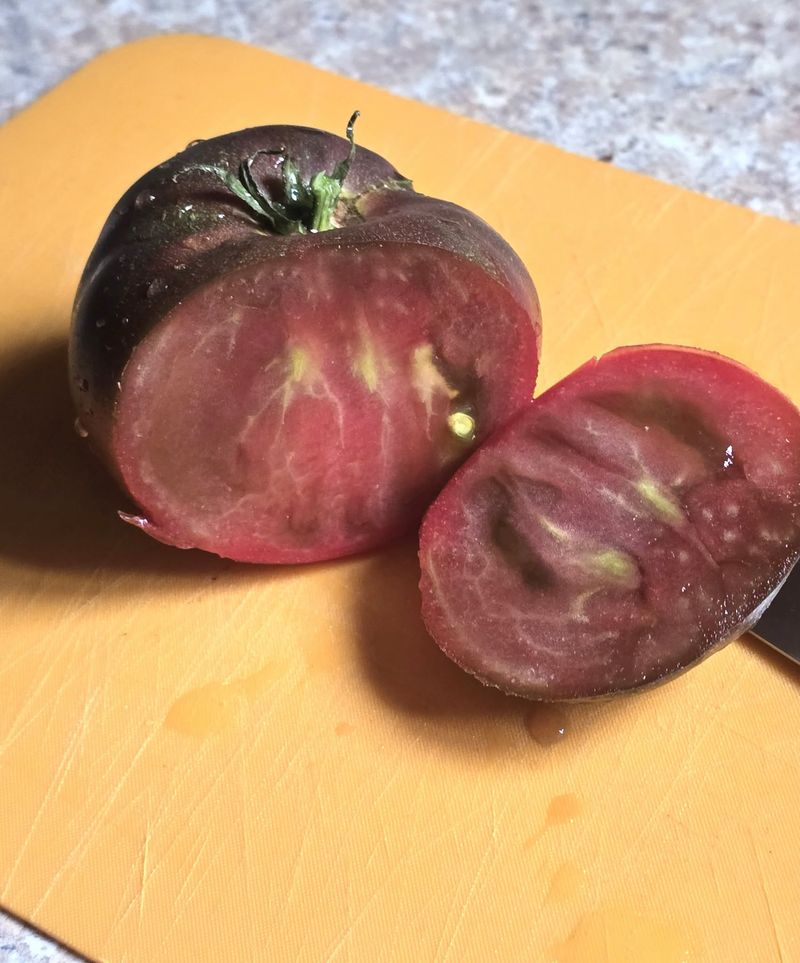
The big day arrived! Filled with anticipation and great expectation, I went outside, leaned into the raised garden bed, and picked my first tomato of the summer. This was not just any old tomato; it was the perfect tomato for a BLT sandwich. I sliced the tomato carefully placing each slice neatly on whole wheat bread. I added crispy bacon, lettuce from the church garden, and a few dollops of real mayo. Delicious. I immediately gobbled down two sandwiches in quick succession.
Even though I have had good luck growing tomatoes in the past, they were not the types of tomatoes that make good BLT sandwiches. Last year, I grew so many Roma tomatoes that if I laid them end to end on the ground they could probably have reached Minneapolis and back again. There have been other years, when I ate so many cherry tomatoes that my eyes looked exactly like what I was eating. But this year, I had a singular purpose; I was determined to grow only big beefy tomatoes for BLTs.
In the spring, I prayed God would take pity on me. Lo and behold, God answered my prayer. A friend gave me three tomato plants that she thought would be perfect to help me accomplish the task. However, I soon discovered that I needed to change my thinking about what a tomato should look like. The plants she shared were not deep red Beefsteak, Big Boy, or Giant Belgium’s, but Cherokee Purple Heirloom tomatoes. The fruit, when ripe, looked more like a bad leg bruise than a tomato. However, desperate for the perfect BLT, I let go of my preconceived idea that a tomato must be red and quickly fell in love with the Cherokee Purple. After eating that sandwich, and with juice joyfully dripping down my chin, I thought if I were Jesus, I would say, “The kingdom of heaven is like a BLT sandwich made from Cherokee Purple Heirloom tomatoes.” Of course, I am not Jesus! I am, however, committed to the work Jesus has asked his followers to do.
Today, I believe that if the church is going to remain a place of hope, it must allow the Spirit to breathe new life into old structures just like a Cherokee Purple tomato transformed my BLT sandwich. It is only then that the Church can be renewed through the promise of the living Christ.
"Behold, I am doing a new thing; now it springs forth, do you not perceive it? I will make a way in the wilderness and rivers in the desert.” Isaiah 43:19
Monday Musings
Monday Musing
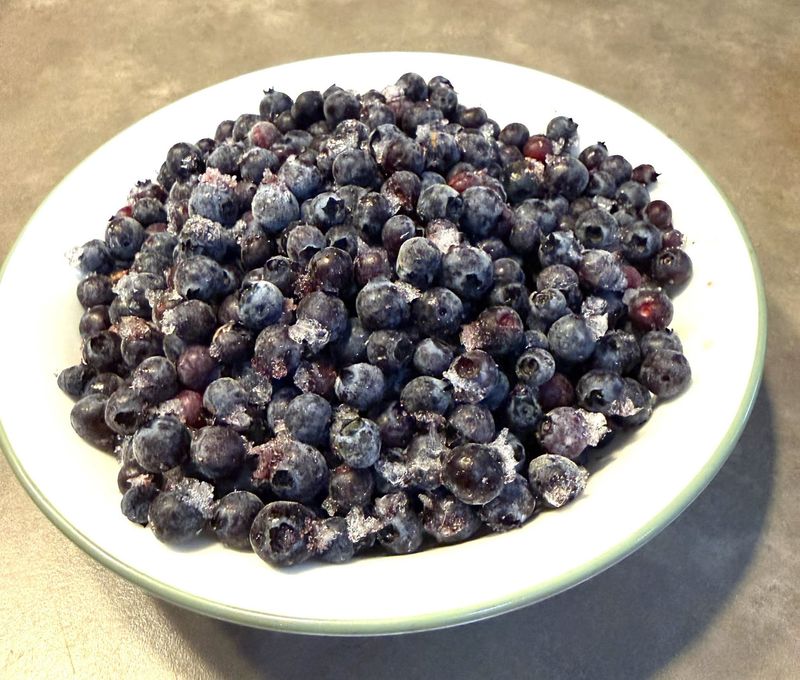
I know many people believe that the opening of fishing season or the opening of deer hunting are the two most important events in the state of Minnesota. I would beg to differ. I believe berry season, especially blueberry and raspberry, easily rivals both fishing and hunting. For example, just as opening day for fishing and deer hunting provides great storytelling opportunities, berry boasting is also a real thing. Yesterday at both Pengilly UMC and Wesley UMC, people shared stories about how many cups, quarts, or ice cream buckets of blueberries they picked, while others talked about how many jars of raspberry jam they prepared and put away for the winter months. I am fully aware that folks cannot make jerky out of blueberries, but I prefer a nice slice of blueberry pie or a lemon raspberry scone to dried meat any day. Even though venison is delicious, blueberry cobbler for dessert is a great complement to the main course.
To get serious for a moment, one of the great joys of living in Minnesota is that we celebrate our connection to Creation by fishing, hunting, and berry picking and then share what Creation provides with friends and neighbors. I would call this love. Of course, since this is love, it requires us to take care of Creation and give thanks to the Creator for this most gracious gift.
Psalm 104 says,
"Lord, you have done so many things! You made them all so wisely!
The earth is full of your creations...But let my whole being bless the Lord!"
My prayer is that as we enjoy picking berries, making jam, baking pies and muffins, and sharing them with others, we also give thanks back to God and in the process treat the natural world with the dignity and care she deserves.
Monday Musing
Monday Musing
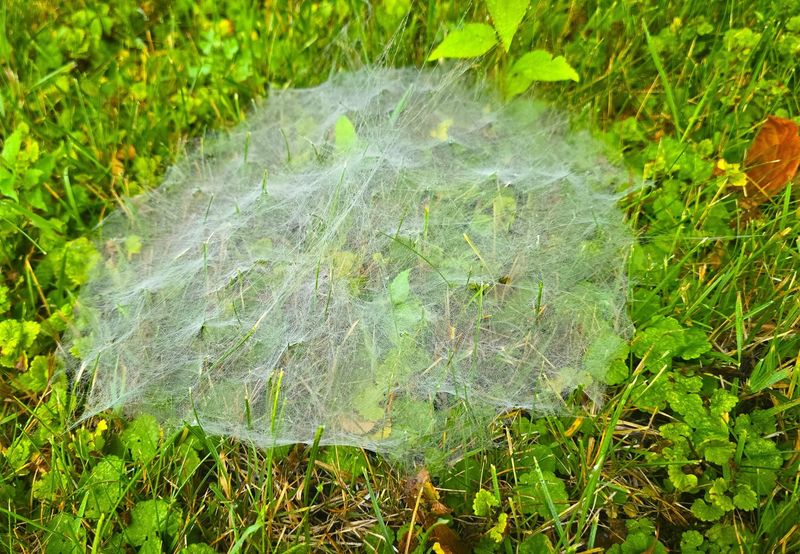
Sunday morning, two unrelated things happened just before church. First, when I went outside just after sunrise, I noticed the lawn was covered with small patches of white. Upon further inspection, I realized this was the work of spiders—funnel weavers to be exact. According to the University of Minnesota Extension Office, "Funnel weavers are common across Minnesota, especially in yards, parks, and roadside vegetation. Their webs often appear overnight, draped across grass, low shrubs, or tucked into corners of porches and windowsills. Morning dew makes them visible, like nature’s lacework stitched across the landscape."
Of course, I've seen these webs before, but for whatever reason on this Sunday morning, I took time to get up close. After further inspection, I found the funnel where the spider waits for a small aphid or fly to get caught in its web so it can quickly grab its breakfast and take back into the hole at the bottom of the funnel. I snapped pictures of eight or nine different webs even though I stopped counting at thirty scattered throughout the lawn. Although they each had a different shape, every web featured a funnel with a small hole at the bottom. I am certain that what attracted me this Sunday was the rising sun causing the dew covered webs to sparkle in the morning light. Although I was tempted to compare the webs to the many churches I pass by on Sunday morning, I decided that comparing the church to a spider web might not be helpful or could confuse readers of this missive. After all, as a pastor of two churches, I would not want people to think that I was a spider wanting to catch them in my web.
The other thing that happened this Sunday was the deep fog I needed to go through to get to church. The fog was so thick in some areas that I could only see a few feet in front of my car. I had to restrain myself because I was tempted to curse at those cars that failed to turn on their lights as they passed me by. So, as I slowly drove past the small lakes where I normally see swans, pelicans, and other waterfowl, I had to assume they were there even though I could not see them. In many ways, this is a good metaphor for faith. After all, when we have faith, we believe in things we cannot see.
My prayer this week is that we take time to explore and find meaning in those things or people we can see but usually ignore, but also have faith in those things we cannot see. Paul, in his letter to the Romans writes, "Hope that is seen is no hope at all. But if we hope for what we do not yet have, we wait for it patiently.”
Monday Musings
Monday Musings
Last Tuesday, I got up early and went for a walk. Once I exited the house, my nostrils recoiled at the dank smell of smoke. The sun was rising but a haze hung thick in the air. The smoke was what one might expect to find in some of our large industrial cities thirty years ago, not in the beautiful forests of Minnesota in 2026. I noticed a couple of wild strawberries near the path. I reached down, picked them, and popped them into my mouth. Expecting sweetness, I grimaced, even the strawberries tasted sour.
Just an hour later, I headed to Hibbing. With each mile the smoke became thicker. It hung over the small lakes like a blanket. I had to look carefully to see the faint outlines of swans, pelicans, and cormorants. My heart breaks for the people of Ely, Grand Marais and all the other places in direct contact with the fires. After all, their lives must go on even as flames destroy dreams, and smoke covers their homes and businesses. My heart also breaks for all of Creation. She groans as trees burn, creatures perish, and ecosystems are altered.
As we watch our beautiful forests burn, we breathe in ash—ashes of death—while in other parts of our great nation, 1000-year floods are happening, not every 1000 years, nor 500 years, but within the span of three years. Can we at least agree that our climate is changing and to a great extent because of human actions and behaviors? We may disagree on solutions, but we can no longer fail to see and acknowledge the obvious: as our world increasingly warms up, more forests will burn, more floods will race down mountainsides, fragile ecosystems will be forever changed, and more lives, creatures and humans alike, will be destroyed.
In Genesis 1:26, God says, “Let us make humanity in our image to resemble us so that they may take care of the fish of the sea, the birds in the sky, the livestock, all the earth, and all the crawling things on earth.”
My prayer is that we do as God asks and care for the earth. We do this not for ourselves, but for the planet we share. After all, Christ did not rise just for our salvation, but for the salvation of all of Creation.
"All Creatures of our God and King, life up your voices with us sing. Alleluia!"
Francis of Assisi
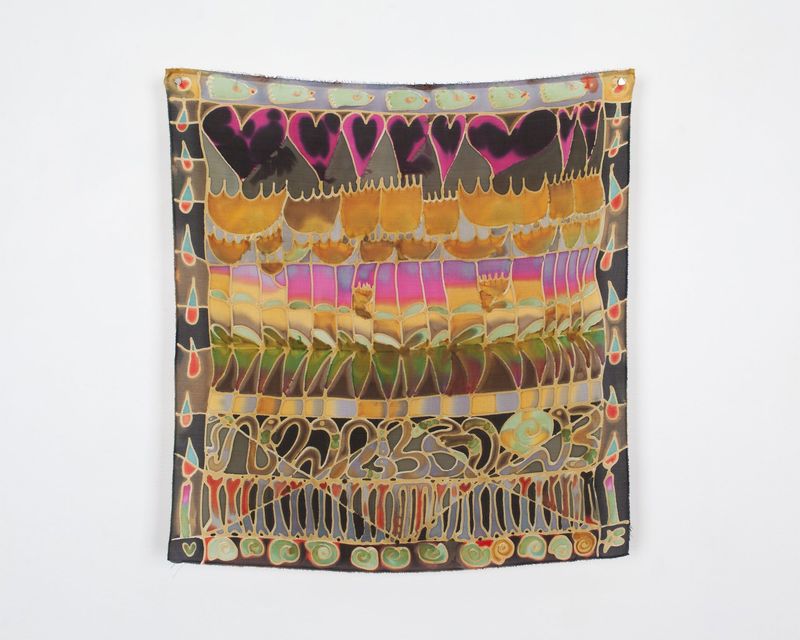
Image: Ursula Scheuer
Monday Musing
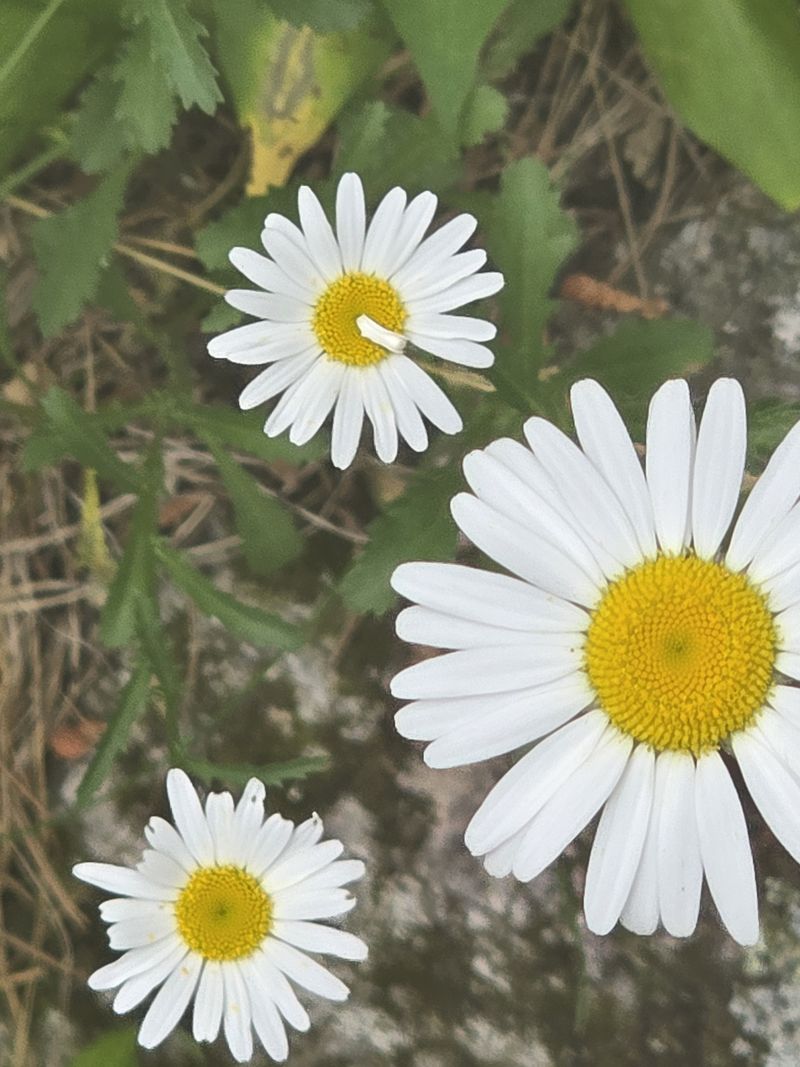
Saturday was the 4th of July and to celebrate, I went to the family home on Shagawa Lake. After pulling into the driveway, I parked the car next to the old garden where my dad had tended beautiful dahlias, roses, foxglove, zinnias, and purple coneflowers for over fifty years. He created that garden using railroad ties and aspen logs for borders. Each year, he added organic matter to the clay soil so plants could grow. But after his passing, even though several of us tried to keep up the garden, it was time to let it return to its natural state. My brother reluctantly took down the makeshift fencing my dad had put up to keep out the deer. The garden, no longer tilled in the spring and again in the fall, is quickly being reclaimed by the forest. As family members gathered in the screen house to celebrate Independence Day, the forest was also celebrating, reclaiming the garden that it had lent to my father so many years ago.
How did I know the forest was celebrating? As I got out of my car, the garden was full of wild daisies, now in full bloom. They were not just celebrating the return of the garden to its natural state but also honoring my dad for carefully tending the soil while he was alive. Daisies are one of my favorite wildflowers. A single daisy, with its soft white petals and bright yellow center represents purity, cheerfulness, and simplicity. A garden full of daisies can attract bees and makes the drabbest landscape appear bright. Watching daisies blow in the wind is pure joy.
Isaiah 61 says, “The Lord God’s spirit is upon me, because the Lord has anointed me…As the earth puts out its growth, and as a garden grows its seeds, so the Lord God will grow righteousness and praise before all the nations.”
My prayer is that just as my dad’s garden, now reclaimed and renewed by Creation, is more beautiful than ever, the Holy Spirit will enter our hearts so all of us, like beautiful daisies blowing in the wind, can be renewed. And then, we can help renew the church, and just like daisies, from the ground up so together we can heal our broken world.
Church Time Change!!!!!!